
Ranorex Logo

Browser Automation That’s Fast and Flexible

Ranorex Studio simplifies browser testing for teams of all skill levels. Automate functional tests across Chrome, Firefox, Edge, Safari, and more without building your own framework or writing complex code.
Ranorex-_Recorder-Screen-Mock-Up
Ranorex-_Develop-Selenium-Tests

Why Browser Automation Matters

Web apps are constantly evolving, and so are the risks of browser-specific bugs and UI inconsistencies. Without automation, QA teams face bottlenecks in fast-paced development cycles, leading to missed issues and slower releases. Manual testing can’t scale to cover every browser, device, and screen size combination. Browser automation helps validate critical workflows early and often—maintaining quality while accelerating delivery.

What Is Browser Automation?

Browser automation is the practice of automating user interface (UI) interactions in a web application such as clicking buttons, submitting forms, or navigating pages to verify that features and workflows behave correctly. By simulating real user actions, teams can validate UI functionality across browsers and devices without the need for repetitive manual testing.

For fast-moving development environments where web apps evolve constantly, automated UI testing ensures consistency, reduces human error, and enables teams to deliver high-quality user experiences at scale. While some tools focus on API testing or backend validation, Ranorex Studio specializes in robust, reliable browser UI automation.
Ranorex-_CI-CD-Integrationz
features_endpoints

When to Use Browser Automation

Browser automation fits into your testing process once the core functionality of a feature is ready to validate from the user’s perspective. It’s most effective after unit and integration testing—before or during system and regression testing. Use it to confirm that the application works consistently across browsers, devices, and environments.

Use Browser Automation to:

  • Validate UI changes and new features across browsers
  • Rerun regression tests with every release
  • Support agile sprints and CI/CD pipelines
  • Confirm layout and behavior on different screen sizes and devices

How to Perform Browser Automation

Define Critical Test Scenarios

Identify the most important user interactions that must work across all browsers. Think logins, searches, or checkouts.

Set Up the Testing Environment

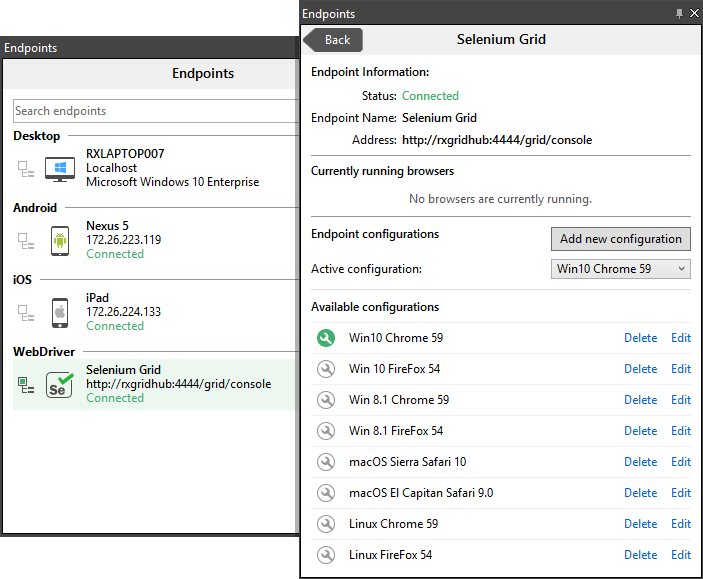
Configure browsers locally or connect to a Selenium Grid (on-prem or cloud) to simulate real-world usage conditions.

Create Your Tests

Record browser actions with Ranorex Studio or script tests in C#/VB.NET. Add validations to confirm that UI elements behave as expected.

Make Tests Modular and Data-Driven

Parameterize inputs and structure tests for reuse across different roles, datasets, and browser conditions.

Run Tests Across Browsers

Execute test suites on Chrome, Firefox, Safari, Edge, and more (simultaneously, if needed) to ensure full cross-browser consistency.

Review Results and Improve

Use detailed logs, screenshots, and video playback in Ranorex reports to debug issues and optimize your test logic.

Best Practices for Browser Automation

Setup Tips

  • Use browsers that reflect your production environment to catch version-specific issues.
  • Centralize test data and environment configurations to simplify reuse and maintenance.
  • Enable headless mode in CI environments for faster, resource-efficient execution.

Performance Tuning

  • Run tests in parallel across browsers and operating systems using Selenium Grid or cloud test labs. 
  • Replace fixed timeouts with smart waits to make tests more stable and responsive.
  • Only automate UI areas that change infrequently to avoid wasted time on maintenance.

Edge Cases to Check

  • Use Ranorex Studio to validate login workflows, including 2FA across web and mobile.
  • Simulate network delays and JavaScript errors to ensure graceful handling.
  • Test various screen resolutions and device emulations to confirm responsive design.
features_endpoints

How Ranorex Studio Supports Browser Automation

All-in-One Framework Replacement

Consolidate web, desktop, mobile (iOS/Android), and visual regression tests without cobbling together separate tools like Selenium, Appium, or custom scripts.

Built-In Selenium WebDriver

Selenium is integrated directly into the Ranorex core API, giving you powerful browser automation out of the box. No extra setup required.

Web Element Recognition

Stop hunting for elusive element selectors. Ranorex Spy and RanoreXPath detect dynamic, nested, and ever-changing web elements with precision.

Flexible, Time-Saving Authoring for All Skill Levels

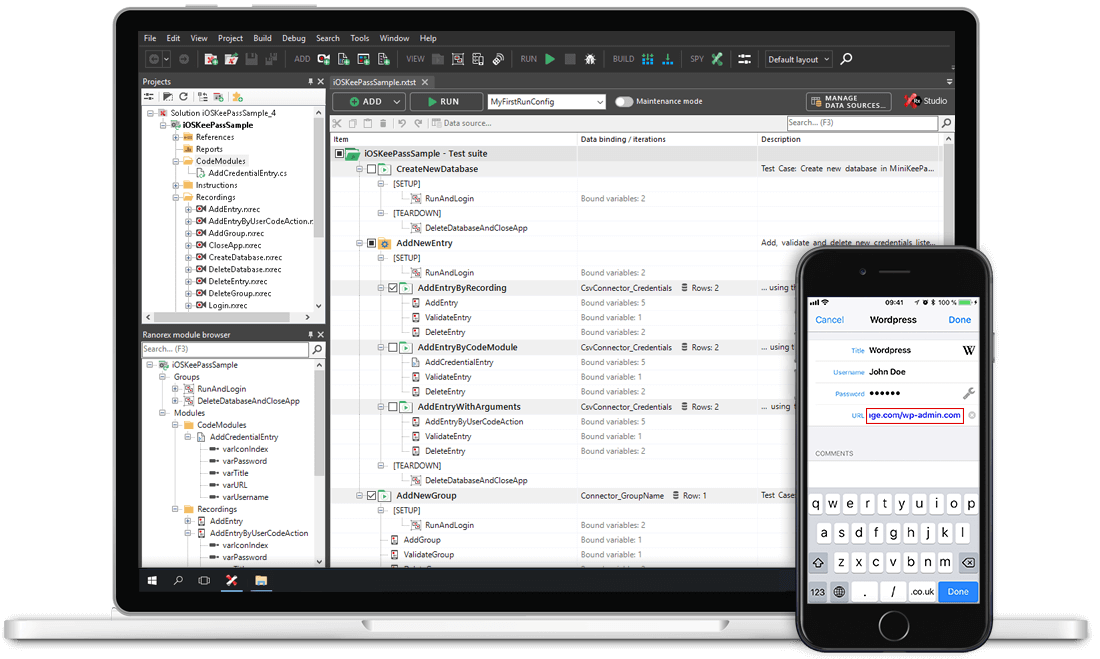
Design tests easily with drag-and-drop functionality. Create reusable test blocks, manage UI elements, and use C#/VB.NET for complex scenarios. Add logs, explicit waits, execution timing, and validations.

Cross-Browser and Hybrid Framework Support

Run tests on Chrome, Firefox, Safari, Edge, and mobile browsers, including support for embedded technologies like Chromium Embedded Framework (CEF).

Useful Integrations

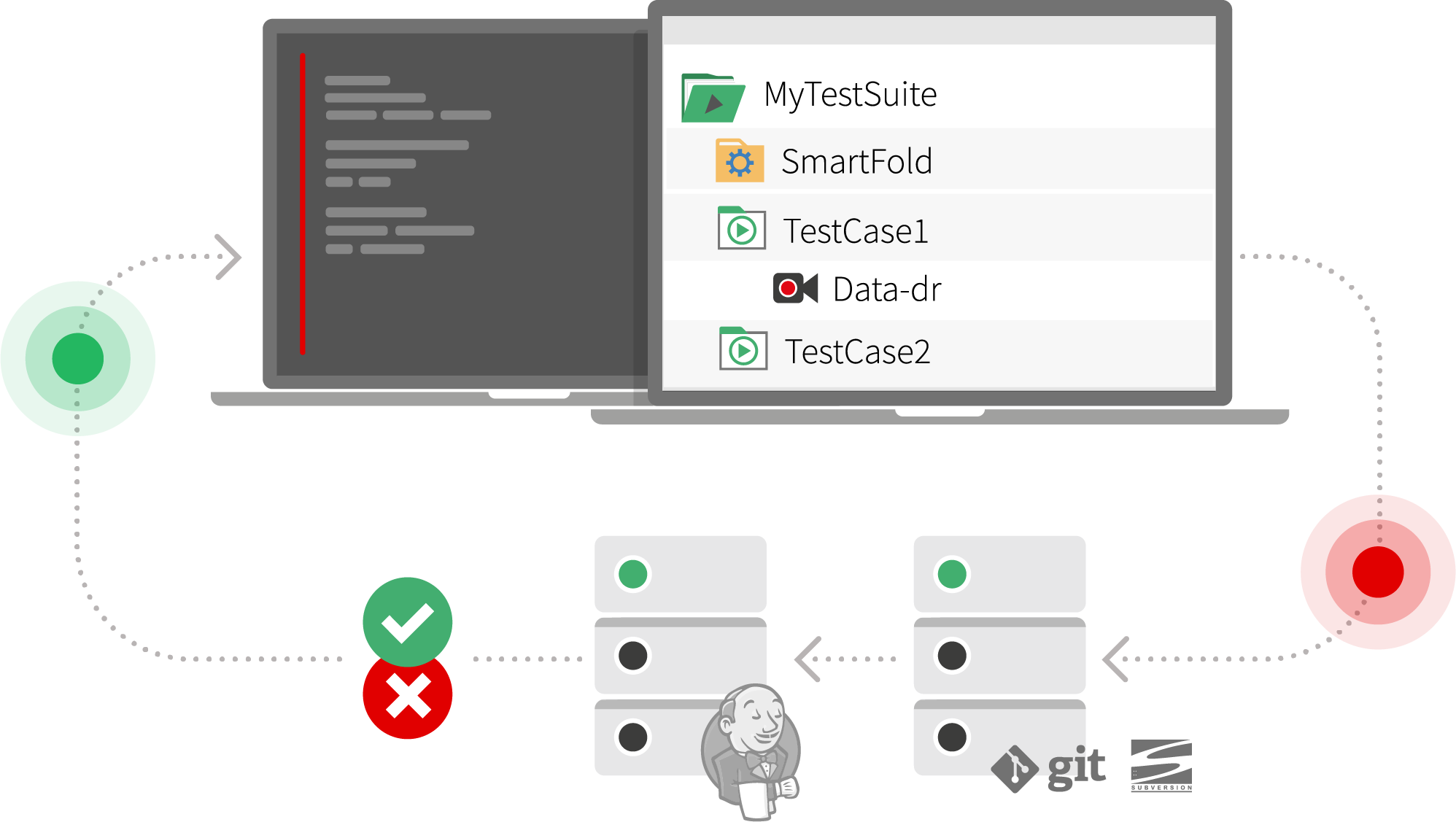
Trigger automated tests within your CI/CD pipelines using Jenkins, TeamCity, or Azure DevOps, and sync results with Jira and other tools across your workflow.

Visual Regression Testing Made Easy

Validate pixel-perfect interfaces with Ranorex Studio’s built-in image comparison capabilities, ensuring visual consistency across browsers and devices.

Insightful Test Reporting

Capture screenshots, logs, and full video playback to troubleshoot faster and share clear, actionable results with stakeholders and developers.
Explore More Testing Topics

Functional Testing

Test end-user workflows across browsers and platforms to ensure every feature works as expected.
Learn More

Regression Testing

Verify new changes don’t break existing functionality, which is essential for stable browser-based apps.
Learn More

Data-Driven Testing

Run your browser tests with multiple data sets to uncover hidden edge cases.
Learn More

Keyword-Driven Testing

Build modular, readable tests with reusable actions so you can easily scale your browser test library.
Learn More

Mobile Testing

Extend browser tests to real mobile devices or emulators for complete cross-platform coverage.
Learn More
book-mobile

Ready to Streamline Your Web Testing Workflow?

Automate faster, cover more ground, and debug less with browser automation built for real QA teams.